Meaning & purpose
More than sword fighting.
The word kendo is commonly translated as “the way of the sword.” Its techniques descend from Japanese swordsmanship, but modern practice is designed for learning rather than combat.
Training develops calm attention under pressure. Practitioners learn to move decisively while treating partners, instructors, equipment, and the dojo with respect. The International Kendo Federation describes the larger goal as cultivating character through the principles of the sword.
Technique is visible. The deeper practice is attention, sincerity, and continual self-improvement.
Equipment
What a kendoka uses.
Beginners start with comfortable athletic clothing and a shinai. Uniform and armor are introduced gradually with guidance from an instructor.
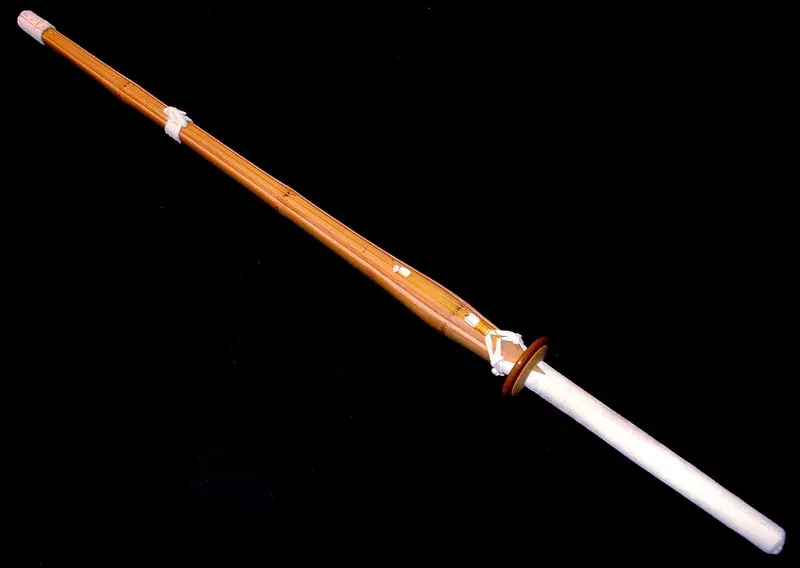 竹刀
竹刀Shinai
shee-nighA practice sword made from four bamboo slats joined with leather fittings.
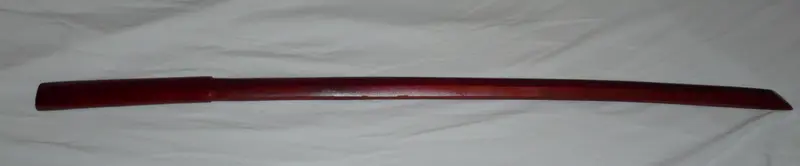 木刀
木刀Bokutō
boh-koo-tohA solid wooden sword used for forms, fundamentals, and paired kata.
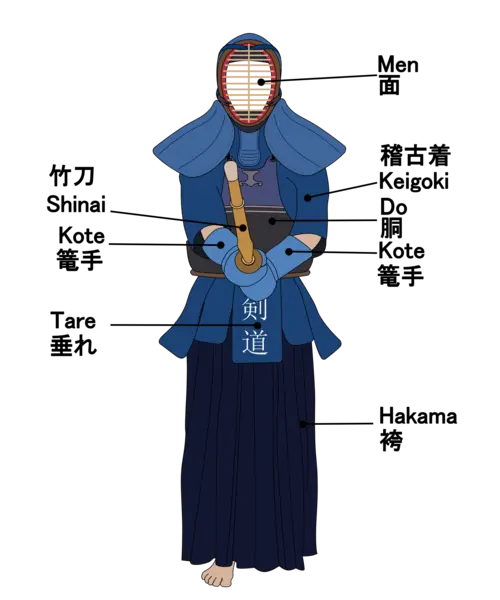 剣道着
剣道着Keikogi & hakama
kay-koh-gee · hah-kah-mahThe training jacket and pleated trousers that form the kendo uniform.
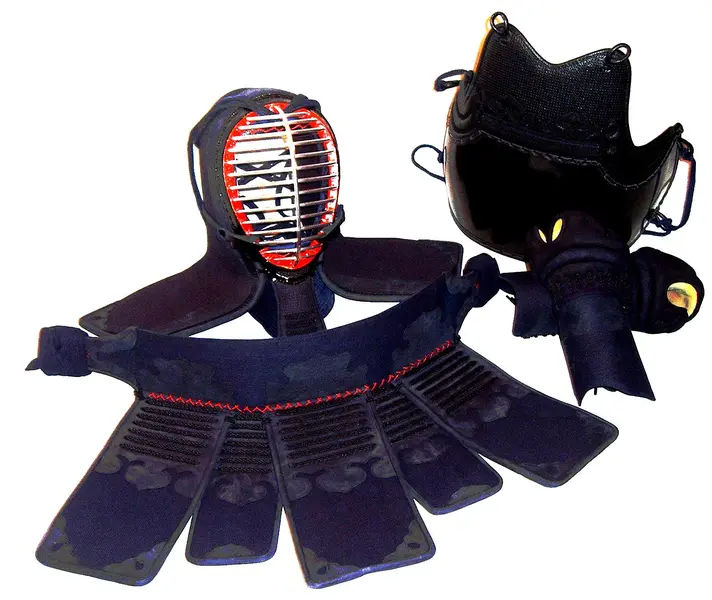 防具
防具Bōgu
boh-gooProtective armor consisting of men, kote, do, and tare.
Targets & scoring
A point is more than contact.
In competition, a valid point requires an accurate strike or thrust to a designated target, delivered with correct posture, the proper part of the shinai, spirited intent, and continued awareness afterward. Three referees judge the action.
A strike to the protected top or sides of the helmet.
A strike to the protected wrist area, usually the right wrist.
A diagonal strike to either protected side of the torso.
A controlled thrust to the throat protector, taught only at an appropriate level.
How practice works
Repetition becomes freedom.
Suburi
soo-boo-reeRepeated solo swings used to refine posture, grip, coordination, and footwork.
Kirikaeshi
kee-ree-kah-eh-sheeA structured sequence of strikes that builds rhythm, breathing, accuracy, and stamina.
Waza-geiko
wah-zah gay-kohFocused partner practice for learning and applying specific techniques.
Ji-geiko
jee gay-kohOpen practice with a partner, where techniques are explored against active resistance.
Kata
kah-tahFormal paired sequences practiced with wooden swords to study the principles of swordsmanship.
Shiai
shee-eyeCompetition matches in which referees award points for valid strikes and conduct.
Kendo in action
See timing and distance at work.
This archival demonstration by senior practitioners shows how posture, pressure, distance, and decisive movement come together in advanced kendo.
Etiquette
Respect frames the practice.
Every practice begins and ends with a bow. This is not decoration: it reminds both people that vigorous training depends on trust, control, and gratitude. Students learn how to enter the dojo, handle the shinai, care for equipment, listen to instruction, and practice safely with partners.
Ready to experience it?